Agent Memory vs Structured Data Access in Production Systems
Separate agent memory from governed data access to keep production systems accurate.
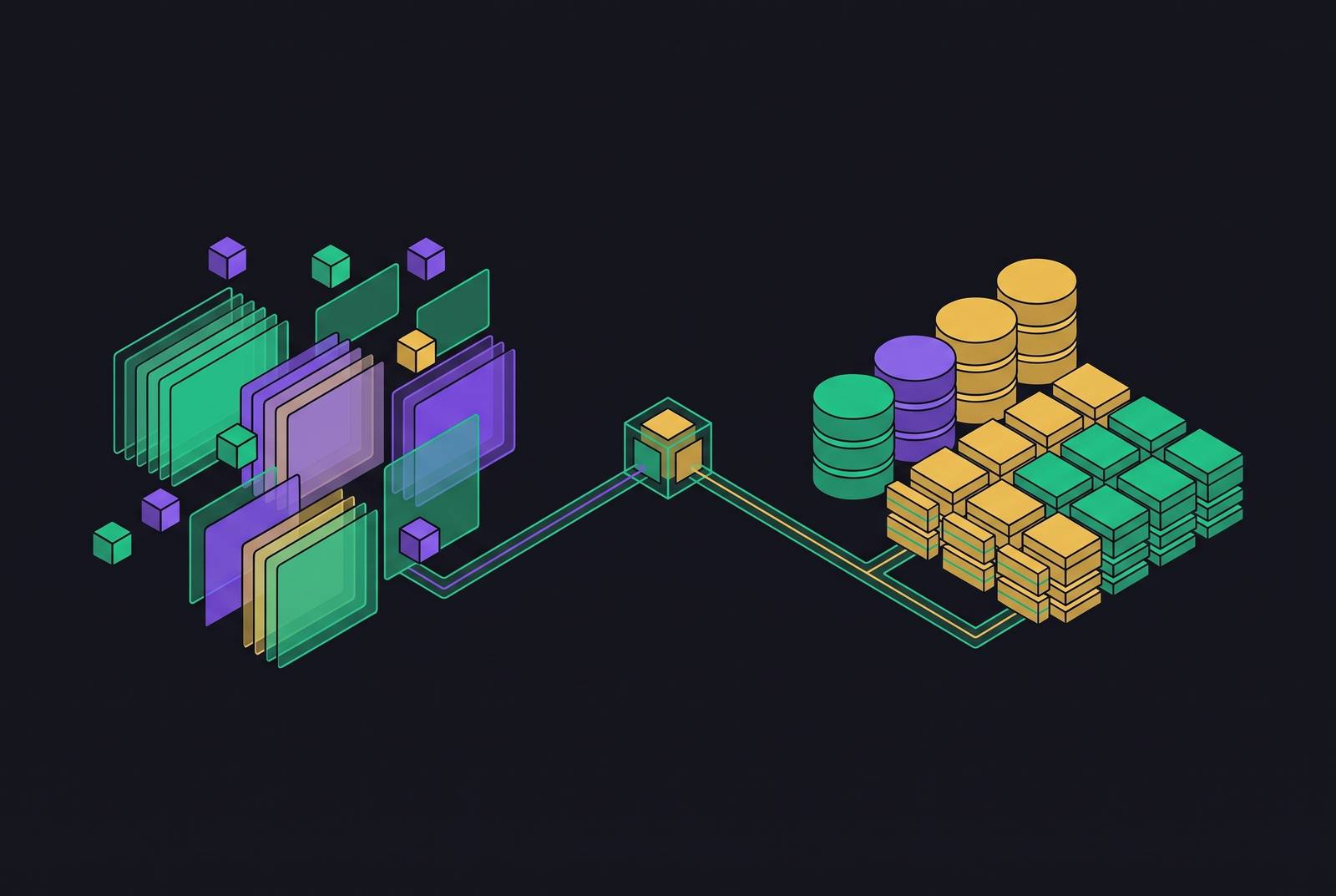
Memory supplies context for reasoning, while governed queries supply authoritative facts. Dreambase implements the governed layer for Supabase teams alongside agent memory. The central design decision is to keep those responsibilities separate, because production systems degrade when approximate recall substitutes for controlled access to business records.
Why agent memory and structured data access are not the same thing
State describes what an agent is doing now, including its current step and pending work. Memory describes what persists beyond that step or session. Their storage, lifecycles, and failure modes differ, even when both contribute to the same task. Structured data access serves a third purpose. It gives the agent governed, schema-enforced, auditable access to the authoritative record of what happened.
The confusion begins in the context window, where instructions, conversation history, retrieved memories, and current task details appear together. In a demonstration, that collection can look like durable storage because the agent can refer to earlier material. But the context window is working memory. Treating it as storage hides the distinction between information available for the current response and information maintained beyond it.
The useful mental model is that the context window is RAM, memory systems provide persistent storage, and structured data access reaches the governed source of truth. Each has a separate contract with the application. Working memory supports the computation at hand, while persistent memory keeps selected context for later use. Neither contract includes enforcing a shared definition of a business metric.
How agent memory is actually structured, and where each layer breaks
A production memory system has at least three distinct mechanisms, each of which solves a different problem when the system runs. Working memory holds the goal at hand, recent messages, intermediate outputs, and the status of tool execution. It should remain small and reconstructible if lost. However, full conversation history, retrieved documents, and tool outputs can quickly expand a manageable session. Output quality then degrades in ways that are difficult to trace to any single addition.
Persistent state for checkpointing solves a different problem by recording versioned execution snapshots. Those snapshots let a workflow resume after a crash, worker restart, or human approval step. They do not make external actions safe to replay. An action that changes external state still needs an idempotency key or reconciliation logic.
Long-term memory stores selected facts, user preferences, and validated task knowledge across sessions. It grows with the application and is retrieved selectively on demand. Production retrieval can combine dense semantic search through vector embeddings with sparse keyword retrieval, then merge and re-rank the results. That makes retrieval quality a direct constraint on output accuracy. Stale or irrelevant memories actively degrade answers unless the system maintains their lifecycle.
Shanghai Jiao Tong University's agent memory study evaluated twelve representative memory systems and found that no single architecture dominates across all scenarios. Unlike transactional updates under a predefined schema, agent memory must accommodate uncertain, partial, and sometimes contradictory information. Memanto research describes the cumulative operational cost of this complexity. The costs of storage, retrieval, maintenance, and context construction add to one another. Adding another memory mechanism therefore does not remove the need to define what the agent should remember.
What memory cannot do: the hard ceiling fuzzy recall hits against business facts
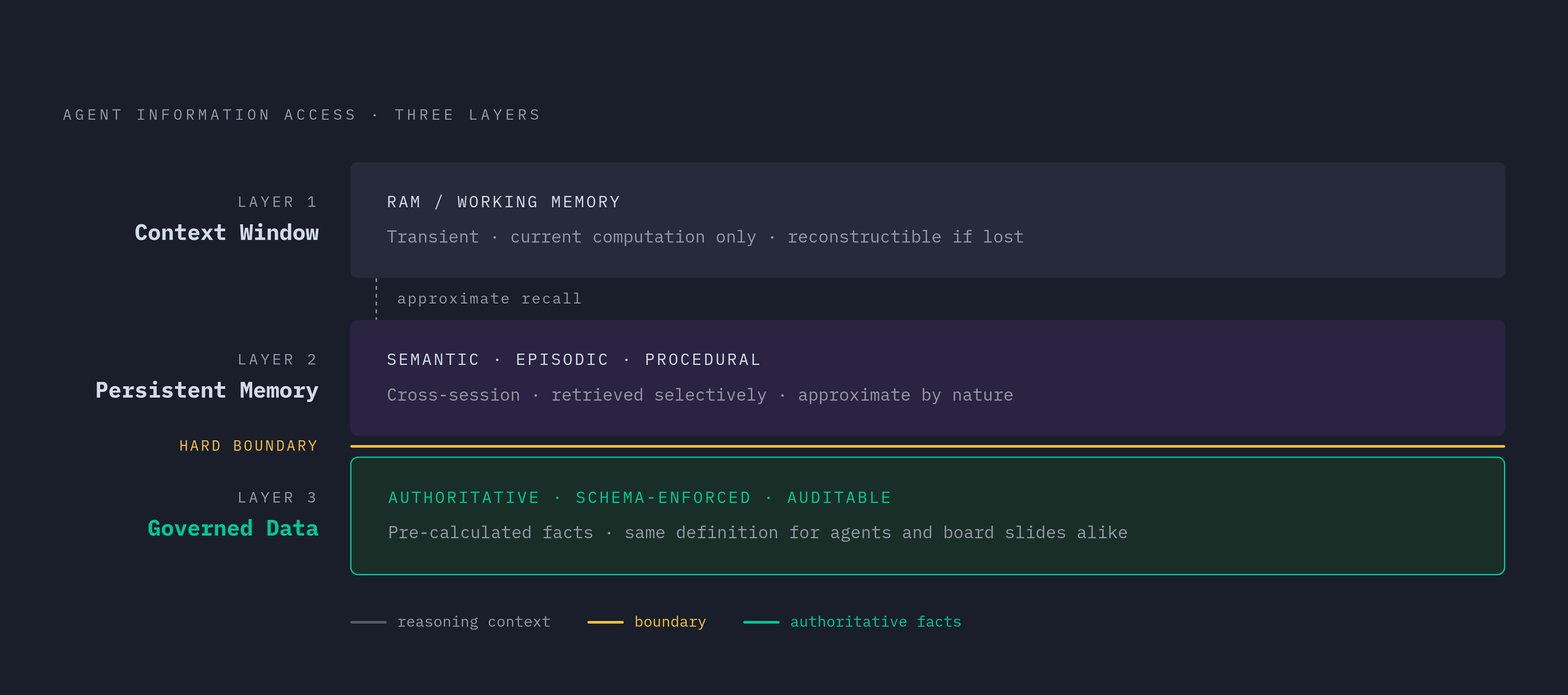
Even a well-maintained memory system cannot turn semantic similarity into an authoritative business fact. Vector retrieval returns related content that may or may not be correct. A revenue figure recalled from memory may fit the question closely yet fail to match the governed metric the question asks for.
The same distinction applies across consumers. What one agent learned in a session is not automatically available to another agent or to a human analyst asking the same question. Shared memory also needs infrastructure to maintain consistent views under concurrent updates. Shanghai Jiao Tong University's agent memory study found localized maintenance more cost-efficient than global reorganization. That efficiency does not guarantee that two agents asking for the same fact receive the same answer.
A question about why CAC jumped last week exposes the practical difference. An agent answering from memory reconstructs an explanation from retrieved fragments, whereas an agent querying a governed dataset computes from the underlying numbers. Hyper, an AI-native marketing platform with agents, uses Supabase to run the query, pull the breakdown, compare the prior period, and surface the campaigns that changed. Its agents read from the same Postgres instance as other tools.
Numbers ready for the board, audit trails, and regulatory compliance need that stronger contract. Revenue figures, subscription counts, and compliance records need definitions and attributable query results. Memory can explain the context around those facts, but it cannot serve as their authority.
Why agents that touch production databases directly are not the solution
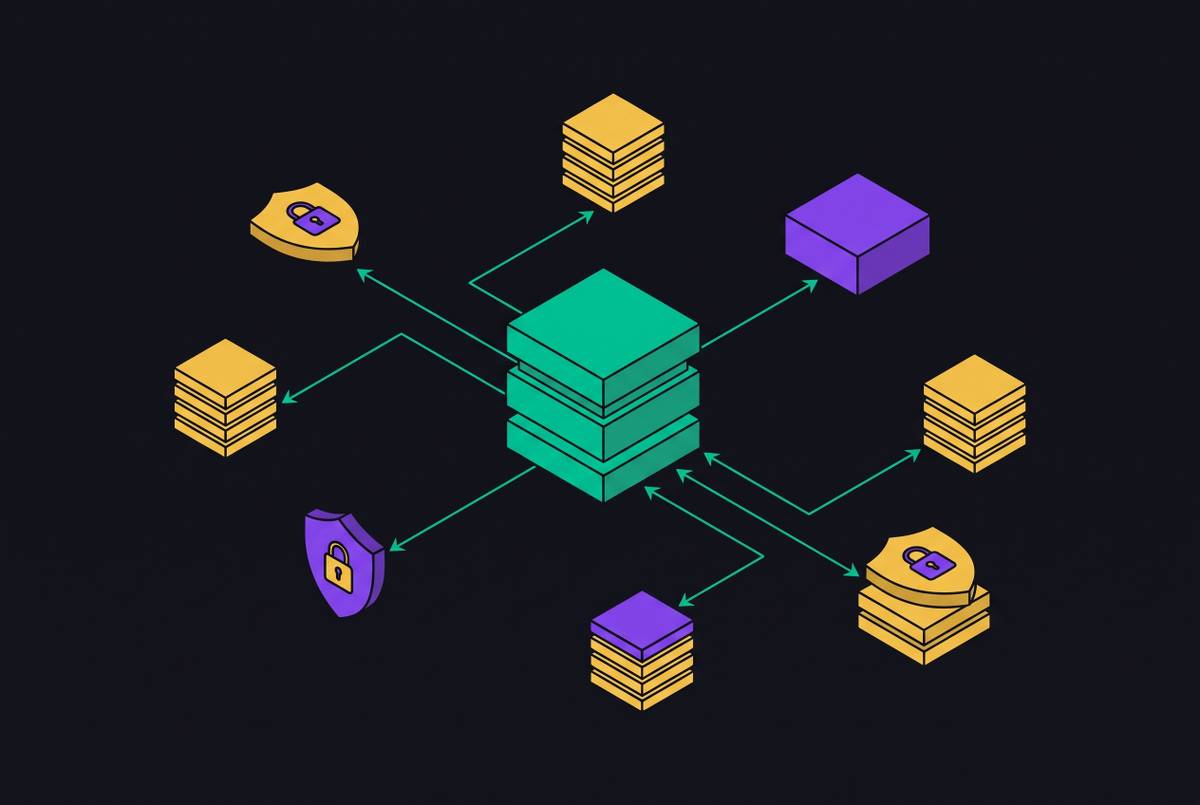
Giving agents direct access to the production database seems to settle which facts to trust by putting the records within reach. However, it exchanges uncertain recall for risks of data corruption, runaway costs, and unauditable access. An agent may read a column without knowing what it means in the business. Semantic context without query access is equally incomplete, so the tool layer must connect both.
Access controls present a separate gap. Many MCP implementations omit authentication, while others lack role-based enforcement. The NSA's Artificial Intelligence Security Center published guidance on May 20, 2026, stating that the protocol's “rapid proliferation has outpaced the development of its security model”. Standardizing tool calls does not establish who may use them or which records they may reach.
Documented vulnerabilities show why that boundary matters. CVE-2025-32711, “EchoLeak,” with CVSS 9.3, demonstrated zero-click exfiltration through a hidden prompt in a crafted email. CVE-2025-49596, with CVSS 9.4, allowed unauthenticated arbitrary command execution through MCP Inspector. Dynamic tool invocation, implicit trust between agents, and uncontrolled context sharing compound exposure. These failure modes make unmediated access an architectural risk.
Supabase reached a multi-billion-dollar valuation in June 2026 as the number of database launches grew sharply. That expansion raises the stakes for the boundary between agents and production records. The need for exact answers does not justify removing the controls around the systems that hold them.
The governed data layer: what sits between agent memory and the production database
The governed data layer resolves this tension by mediating access rather than asking memory or the production database to absorb the other's responsibilities. It must provide identity and authentication, semantic grounding, query performance isolation, lineage, cost controls, and auditability. MCP can standardize the interface through which an agent calls tools. It does not supply the data platform underneath. A production design must establish those guarantees independently of the protocol.
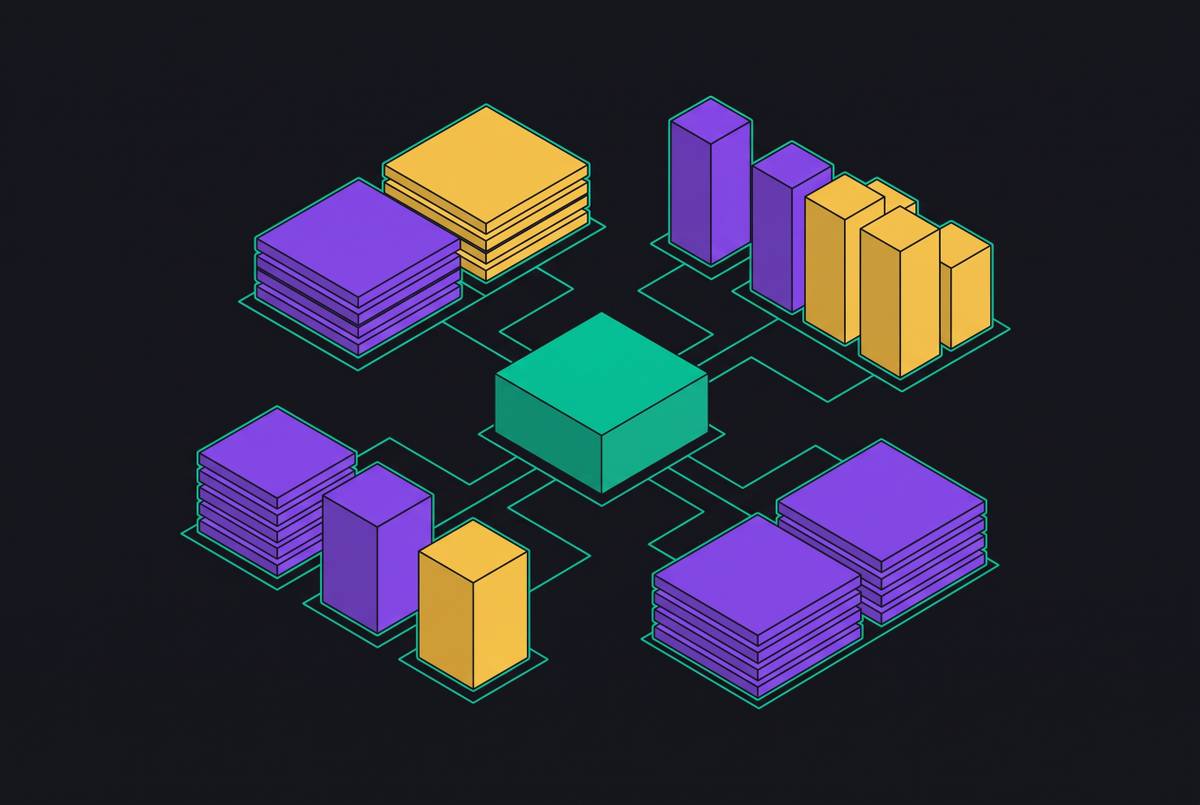
Pre-modeled, pre-calculated datasets provide the unit of controlled access. Instead of exposing raw tables and asking each consumer to reconstruct a metric, the layer calculates it under one definition. An agent querying MRR can then use the same metric as a board slide. This shifts the responsibility for business meaning out of probabilistic reasoning and into the governed dataset. The agent interprets the result using the governed dataset's definition.
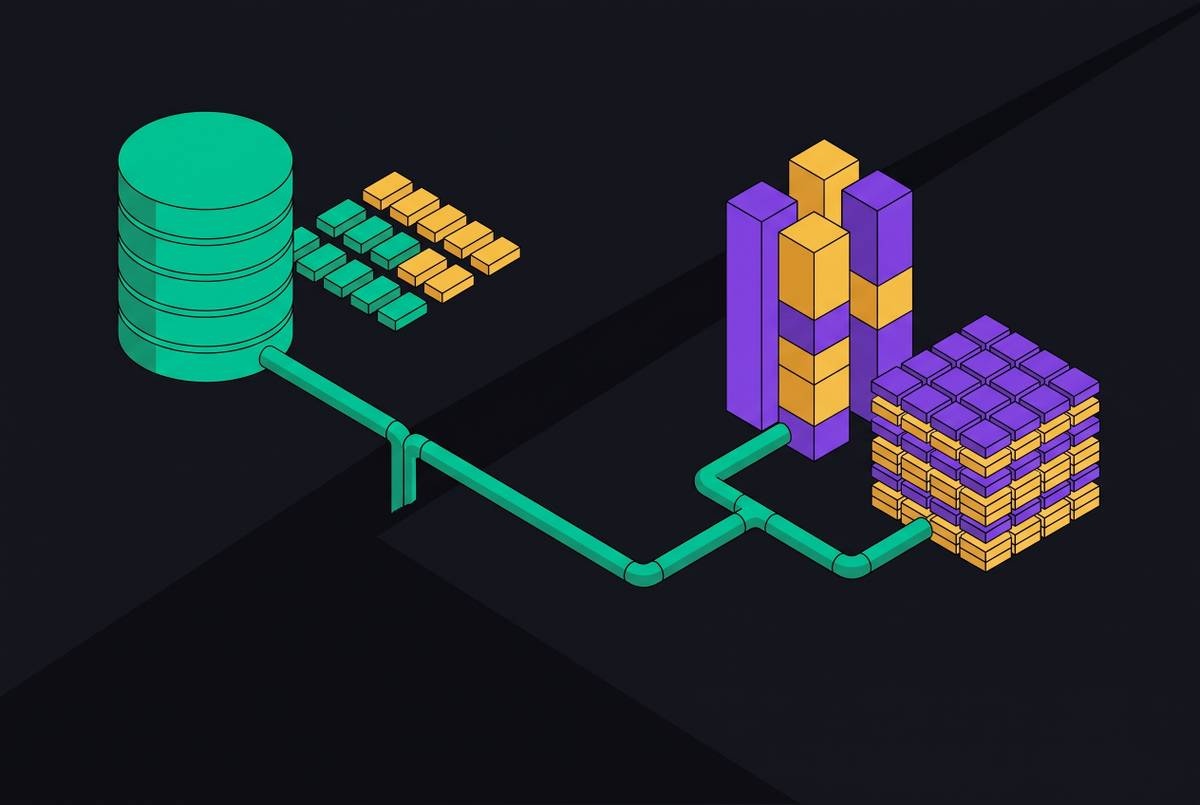
Dreambase implements this pattern with governed Parquet datasets queryable through DuckDB and pre-calculated metrics exposed through a single MCP server. Its Supabase integration also reads live Postgres directly as the analytical home, keeping data within Supabase with no ETL, no schema changes, and no separate data warehouse. The Parquet/DuckDB analytical layer sits on top of Postgres. This gives Supabase teams a way to use governed access without giving agents raw production credentials.
Row-level security limits results to authorized records, while column-level masking redacts sensitive fields within otherwise permitted queries. An agent that handles fraud detection, for example, can get transaction amounts and timestamps without getting payment card numbers. Database users set up for specific purposes and approved query patterns ensure least privilege, while governed datasets or read replicas keep analytical queries off the production primary.
A centralized gateway must enforce permissions and log access across those routes. Real-time observability must also keep track of every data touchpoint, decision node, and API call. Audits done from time to time cannot keep up with how fast autonomous agents make decisions.
Where memory and structured access belong together in a production architecture
Semantic memory holds profiles and policies, episodic memory holds the outcomes of tasks and the commitments made, and procedural memory holds routing rules and playbooks learned along the way. These records help an agent understand the request and frame the query. Structured access supplies revenue, churn, active subscriptions, CAC, and retention cohorts. Everyone who uses those facts needs the same answers and a basis that can be audited.
The complementary flow begins when the agent retrieves relevant context. It then queries the governed layer for the authoritative answer and uses that result in working memory for the current task. Afterward, it can store the outcome as an episodic record. That record preserves the task's context without becoming a substitute for the next authoritative query. A read-only analyst agent illustrates the separation, with no write path to production enforced at the infrastructure layer.
Hyper's Supabase architecture gives the distinction a concrete form. It uses pgvector for semantic search over past campaigns, while Realtime streams changes in spend, pacing, and anomaly signals. For Supabase teams, Postgres can hold conversation state and embeddings beneath governed analytical datasets. A separate cache is unnecessary unless a measured read-latency problem justifies it.
In an implementation such as Dreambase, governed Parquet datasets derive from the same Supabase Postgres project and are queried through DuckDB via a single MCP server. Agents and dashboards therefore use the same metric definitions, while memory keeps its separate role in reasoning. This separation also keeps the cumulative operational cost of agent memory from becoming the maintenance model for the authoritative record.
The design checklist for teams building agents on Supabase and Postgres today
Define the memory taxonomy before writing code. Specify what belongs in semantic, episodic, and procedural memory so the extraction pipeline does not collect everything available. Set the scope before choosing storage. Otherwise, accumulated history can turn retrieval into a source of noise.
Set a hard working memory ceiling. Use a token budget when building context, summarize older conversation history, and write only facts that will last to long-term memory. Retrieve those facts when needed instead of loading every stored memory into each prompt.
Implement checkpointing before the first multi-step workflow reaches production. Capture the run ID, current step, intermediate results, pending actions, and workflow version at every defined boundary. Add idempotency keys separately for actions that modify external state.
Make sure every analytical agent has read-only access. Use purpose-specific database users with minimal permissions and remove any write path from the agent to production Postgres. Route analytical queries to governed datasets or read replicas. Enforce this boundary in infrastructure.
Choose the governing data layer before the first agent queries a metric. Set one pre-calculated definition for each metric that agents and humans can access through the same endpoint. For Supabase teams without a data team, consider Dreambase at this decision point. Its governed Parquet datasets derive from the existing project and are exposed through a single MCP server without ETL or schema changes.
Build observability from the start. Log every data touchpoint, decision node, and API call. Monitor agent interactions in real time for unauthorized access. Retrofitting this visibility into a running production system is expensive and often incomplete.
Set infrastructure-level cost ceilings. Apply hard limits to token consumption, query counts, and external API calls. Do not depend on engineers watching dashboards to interrupt an infinite loop. Make bounded resource use part of the agent's execution environment.