When Analytics Infrastructure Must Outlive Every Frontend Decision Your Team Will Ever Make
Governed metrics, permissions, and history should outlive any dashboard.
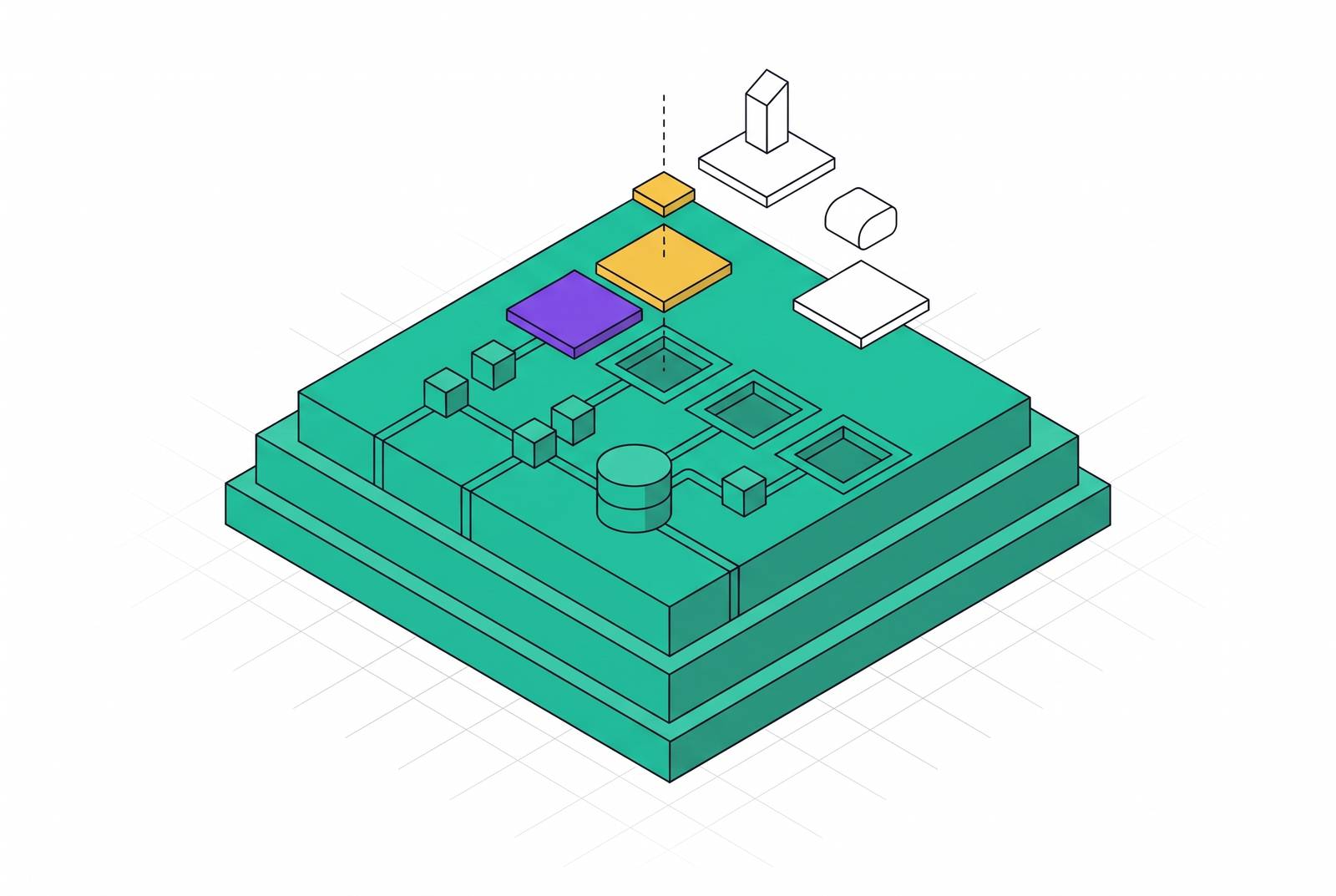
For API-first and agent-first teams, a headless analytics platform should keep metric definitions, permissions, and event history outside any frontend and expose governed datasets through a stable API or MCP interface. For Supabase builders, that means an analytical copy of Postgres data. The durable investment is this governed layer, because dashboards and models can change without changing what the numbers mean.
Why analytics infrastructure exists on a different replacement cycle than frontend tooling
A team midway through a BI migration can discover that the new dashboards work but the metric history no longer matches. One engineer writes SUM(revenue), while another writes SUM(amount_captured), and Q2 revenue now has competing definitions. The discrepancy may remain unnoticed until an investor asks for audited numbers. What looked like a presentation change has become a reconciliation problem.
The underlying mismatch is one of replacement cycles. Frontend tools turn over as team preferences, investor expectations, and AI-native interfaces change, but metric definitions, permission structures, and event history must persist. Replacing a dashboard can take a sprint. Changing a definition retroactively can cost the trust needed during a fundraise, because past and present results no longer share a basis for comparison.
A strict data dictionary gives every metric one owner and one definition, preventing departments from maintaining incompatible versions of the same number. Without that boundary, each frontend becomes another place where business logic can diverge. The presentation layer is relatively cheap to replace, while the semantic layer is not. Treating them as one asset creates the migration risk.
What “decoupled analytics” actually means in structural terms
Decoupled analytics places metric definitions, permission structures, and governed datasets in a layer that no single frontend owns. Any authorized dashboard, report, or agent can query that layer through a stable interface. The semantic layer sets out what the metrics, entities, relationships, and governance policies are. The presentation layer renders the result for its audience.
Headless analytics follows the logic of a headless CMS, separating data from the surface that displays it. A product without a prebuilt dashboard is not necessarily decoupled if its consumers must recreate metric calculations or permissions themselves. Full API control is useful when the API exposes governed meaning, rather than simply offering another route to raw tables.
The governed layer holds pre-calculated metrics with owned definitions, row- and column-level access policies, stable event history, and query audit records. Consumers request datasets by name. Each metric still needs one owner who answers for it, because architecture alone cannot settle disagreements over what revenue or retention means. For teams adding usage analytics to an AI agent without a dashboard UI, this is the prerequisite for agent-readable data.
How MCP turned a good architectural principle into a concrete integration standard
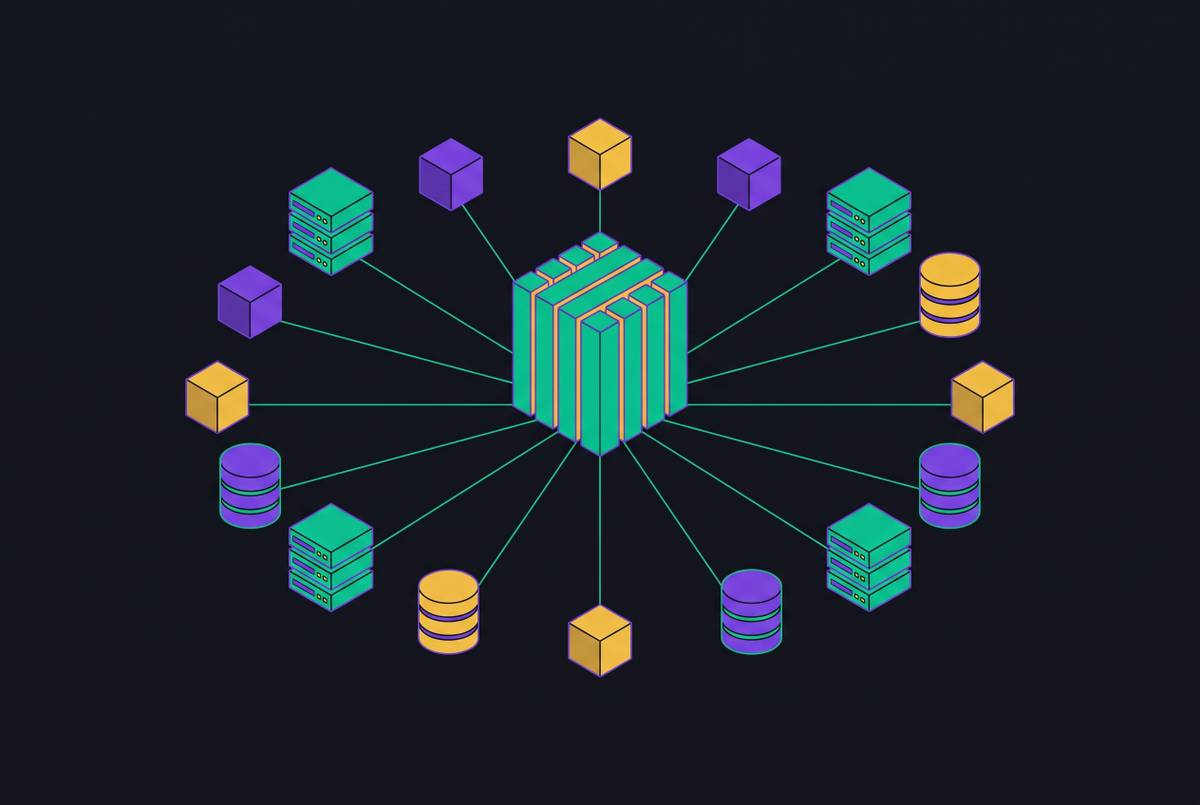
MCP gives the headless architecture a shared integration surface. Without a shared protocol, each pairing of an agent-framework and a data-source needs its own connector, which creates an N×M integration problem. With a shared protocol, teams need only N+M implementations.
Anthropic introduced MCP, which subsequently moved to the Agentic AI Foundation under the Linux Foundation. Support across Claude, ChatGPT, Gemini, Microsoft Copilot Studio, and Cursor established an interface spanning competing platforms. That breadth reduces dependence on any one agent vendor. A team can change the model behind an agent without having to rebuild its data integration to use a different proprietary connection.
Salesforce announced Salesforce Headless 360 at TrailblazerDX on April 15, 2026, exposing data, workflows, and business logic through APIs, MCP tools, or CLI commands without requiring a browser. Its launch included more than 60 new MCP tools and 30+ preconfigured coding skills. Informatica announced fully headless data management at Informatica World 2026, exposing IDMC capabilities including metadata search, address verification, data quality checks, and MDM operations through native MCP support. These examples address different systems, but both separate access to capabilities from a GUI. MCP supplies the transport, while the semantic layer determines what a dataset means or who may use it.
Why MCP connectivity alone does not make data safe for agents to query
A shared transport also makes it easier to use more access than a task needs. MCP delivers what the underlying credential can reach. It does not make that credential appropriately scoped. An agent can issue requests at machine speed, turning a permission gap into a much larger exposure than a human-scale mistake. Connectivity is not an authorization decision. A successful pilot proves that requests work.
Astrix Security’s review of open-source MCP server implementations found that most relied on long-lived static API keys or personal access tokens, with few using OAuth. Such credentials leave access tied to standing privileges. Traditional role-based access control can also be too coarse for agents that need temporary permissions as their work changes. The authorization boundary must therefore exist outside the model’s judgment.
The March 2026 paper Before the Tool Call introduces the Open Agent Passport and describes the need to authorize actions before they execute. Its live adversarial testbed recorded successful social engineering against the model under a permissive policy 74.6% of the time. Model alignment is probabilistic, while post-hoc evaluation looks backward. Neither provides deterministic enforcement before an individual tool call executes. For Supabase and Postgres teams, direct agent queries against production also risk connection-pool exhaustion and row-level security bypass.
The safe access pattern — a governed analytical copy behind the MCP interface
The safe pattern places a governed analytical copy behind the MCP server, with no agent queries reaching the production instance. Datasets are modeled and validated before an agent requests them. This separates analytical demand from transactional work while giving humans and agents the same defined metrics. The copy is a governance boundary whose contents and access rules determine what downstream consumers can use.
To set that boundary, teams should list every source an agent will touch and set the row- and column-level policy before they create the connection. Data should then be exposed through a governed protocol layer. Pre-calculated datasets, such as governed Parquet files queryable through DuckDB, provide context without consuming production connections. Agents discover the available datasets and request them by name through Resources and Tools.
Every interaction should also produce a structured transcript collected by the infrastructure. Access to those transcripts must itself be governed through the out-of-band metadata channels. OAuth/SAML identity passthrough and user-level enforcement at the connection allow the access boundary to follow the requester across different agent models. Together, these controls preserve both the integrity of the numbers and the authority under which they are retrieved.
What Supabase teams must instrument before analytics infrastructure can be governed
A governed analytical copy needs signals from Postgres that teams can trust. For Supabase teams, the practical starting point is observability from the beginning, paired with event tracking from the first user interaction. Database telemetry reveals how source workloads behave, while product events supply the history needed for later cohort and retention analysis. Neither can substitute for the other’s role. Governance cannot reconstruct product interactions that were never recorded.
The minimum observability stack begins with pg_stat_statements, enabled by default on most managed Postgres installations. It records query mean time, total time, and calls, providing a foundation for understanding the source workload. auto_explain adds execution plans for queries slower than a threshold set to the team’s SLO. The Prometheus postgres_exporter supplies metrics across 20+ built-in collectors, including active connections, buffer cache hit ratio, rows fetched per second, lock contention, and replica lag.
RLS evaluation also deserves attention before analytical demand grows. A policy that re-evaluates auth.uid() per row can turn a large-table query into a timeout, while the scalar subquery (select auth.uid()) lets the planner evaluate it once. This is separate from deciding who has access. Expensive reporting workloads should move to replicas, materialized views, or an external analytics layer so they do not compete with transactional traffic for production connections. Instrumenting these signals early gives the governed copy a usable operational baseline, while early event collection preserves the product history it will model.
Metrics that must remain stable across every frontend swap a startup will ever make
The business case for that infrastructure is the ability to reconcile operating metrics across time. At seed stage, the core set includes MRR, monthly MRR growth, short-window retention cohorts, and early unit economics such as CAC and LTV/CAC. Founders may need to check that those numbers match billing records during due diligence. The governed layer keeps the calculation and the history it uses separate from the tool that displays it.
At Series A, the set expands to ARR, net revenue retention, the Rule of 40, gross margin, and the Magic Number. These should show how the numbers change over 6 to 12 months. A frontend migration must not sever the series needed to explain how performance changed. Otherwise, a dashboard replacement interrupts the evidence behind the company’s account of its growth.
Each CEO-dashboard metric should reconcile to a single source, with ARR from the billing system, cash from the bank, and product usage from the analytics layer. Sales, finance, and product should all use the same version of ARR. The same ownership discipline applies to what “CAC,” “Active User,” and “Churn” mean. Those definitions belong in the governed layer. This gives disagreements a place to be resolved before they become conflicting reports.
Delivery should be independent of the dashboard as well. Metrics should be calculated ahead of time and pushed to the inbox, Slack, or wherever the team works, rather than depend on someone remembering to open a reporting tool. A push mechanism rooted in the governed layer survives the removal of a frontend. Historical events remain available for cohort analysis, and recurring reporting does not disappear with a UI. The sprint spent changing dashboards then remains a presentation project instead of becoming a loss of financial and operational trust.
Why a single governed data layer is the durable investment, not any tool that sits on top of it
Salesforce’s and Informatica’s headless offerings separate business capabilities from the interfaces that expose them. For a growing startup, the equivalent is the same boundary between consumers that can be replaced and data, definitions, and policy that stay in place. A dashboard, report, or agent becomes a client of that foundation.
For Supabase builders, the concrete pattern is a governed analytical copy of Postgres data, with pre-modeled metrics queryable through DuckDB and exposed through a single MCP server. Production remains outside the agent query path. Definitions remain outside the dashboard. Founders who cannot yet hire a data team can make the same investment through a governed layer delivered as a service, provided it pre-calculates metrics, enforces access policy, and exposes a stable API or MCP interface. The purchase criterion is the durability of that layer.
The governance demands reinforce this distinction. Forrester’s AEGIS framework, published in November 2026, emphasizes agents as identities, traceable logs, purpose-bounded permissions, and accountability across supply chains. Such controls need a home of their own, separate from any presentation tool. As event history accumulates and the permission model matures, the governed layer becomes more valuable without requiring loyalty to a particular dashboard or agent generation. For founders and Supabase builders one frontend swap away from losing the numbers they will need during due diligence, that accumulated history and trust is the asset no replacement interface can recreate.