Evaluating Analytics Backends for Supabase Teams When the Product Consumes Metrics Not Dashboards
Code-consuming metrics need governed definitions and API access, not dashboard features.
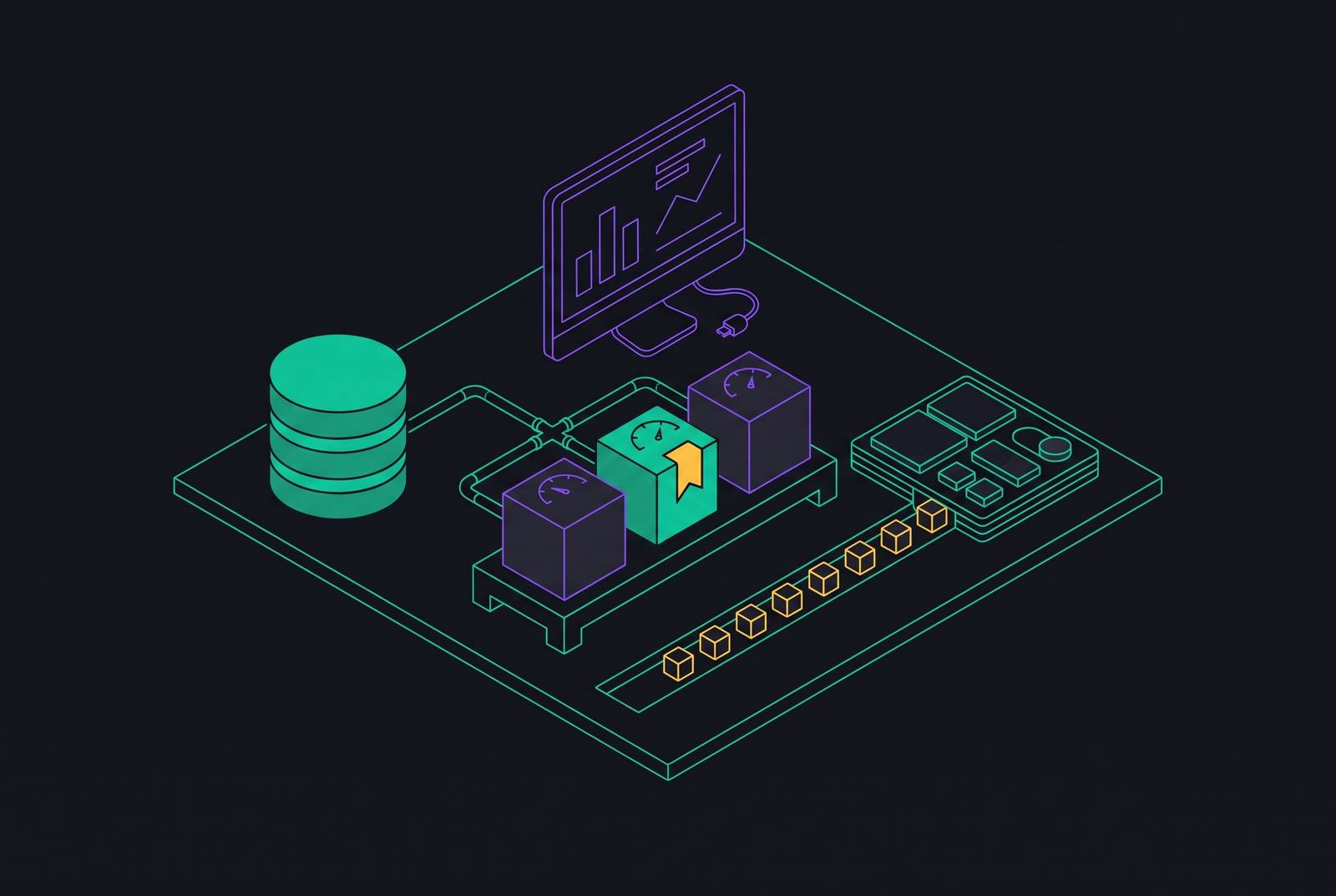
For Supabase teams whose products consume metrics through code, the strongest fit is a headless analytics backend built around governed, pre-calculated datasets, stable metric definitions, and API or MCP access. A governed Parquet-plus-DuckDB layer provides that architecture without an opinionated frontend or a separate warehouse. The decisive distinction is not dashboard quality, but whether code and agents can depend on the numbers without querying production.
Why consuming metrics through code changes what an analytics backend must do
Dashboard evaluation assumes a person is the final consumer. Query flexibility, chart types, and embedded widgets help that person explore the data and understand what a result means. A function call has a different requirement. It needs an addressable metric that means the same thing no matter which code path requests it, and an agent tool invocation needs that same certainty without a person having to interpret the result.
That difference turns analytics into a data contract. When a metric feeds downstream logic, its definition moves from a choice made inside a report to part of the application’s dependencies. A changed query can thus change how the application behaves even when the interface still returns a valid number. The failure can remain silent because the consumer has no reason to question a response that fits the expected form.
Consistency means that the same question, applied to the same data under the same definition, produces the same answer across consumers, even as metrics change with the underlying data. A dashboard and an agent must not calculate competing versions of churn. Consequently, visualization richness no longer distinguishes a suitable backend from an unsuitable one. The evaluation shifts toward who owns the definition, how consumers reach it, and what prevents it from drifting.
Why Supabase's production Postgres is the wrong place to run analytical queries
Supabase’s production Postgres serves transactional, row-level operations. Analytical queries scan and aggregate large row sets, so they compete with application traffic for CPU and memory on a row-oriented instance. Columnar engines address that different workload. Once agents generate analytical requests, the distinction affects infrastructure as well as report speed.
Supabase recommends read replicas for workload isolation and Supabase Pipelines or Analytics Buckets for analytical performance. A replica uses the primary’s compute size by default, although a smaller size is now available for analytics-only replicas. Its compute hours are additional and are not covered by plan compute credits, while its disk allocation is 1.25× the primary’s size. Depending on sizing, that can roughly double database spend. Isolation has a cost, and a replica alone does not change the query workload’s row-oriented foundation.
RLS can add another source of delay. An auth.uid() expression that is re-evaluated for each row can trigger a function call for every row scanned, so an operation that takes milliseconds can hit a timeout on large tables. Concurrent agents can also exhaust connection pools, and adding MCP server instances does not remove that bottleneck. Supabase acquired Hydra, the co-developers of pg_duckdb, to build Supabase Warehouse, offering an emerging Postgres-native columnar path. However, pg_duckdb is not available on managed Supabase Cloud, so most teams cannot yet use that route.
What agents actually need from a data layer, and why it differs from what analysts need
An analyst accumulates context beyond the schema, including which revenue column is authoritative, which report is current, and which source owns MRR. An agent does not start with what the analyst has learned. Faced with ambiguity, it can select a table and act without surfacing the uncertainty that a human might flag.
Starburst identifies table definitions, ownership, freshness, and access rules as context agents need structurally before they reason. Missing context, rather than model capability, is the bottleneck in this account. The data layer must therefore define what churn means and how ARR is calculated before either an agent or a dashboard requests a value. Neither consumer should invent the business logic at query time.
Read-only enforcement, role-based access, and audit trails must be enforced inside the access layer. Infrastructure must record every agent-data interaction automatically in structured form. The agent cannot be responsible for producing its own tamper-proof account of what it accessed.
These requirements are independent of the interface used to display a result. An agent needs data whose meaning is governed, access it is allowed to use, and a record that can be audited, whether its answer goes into a product or to another tool.
The access pattern problem — why agents querying production databases directly is an architectural anti-pattern
Direct production access creates an authorization problem as well as a performance problem. Uchi Uchibeke’s March 2026 pre-action authorization research identifies the gap between allowing an agent to execute tools and enforcing policy before each action. Model alignment is probabilistic and operates at training time, while post-hoc evaluation looks backward. Neither can provide deterministic authorization for each database query.
Trust in an agent’s identity does not resolve that gap. In an MCP proxy setup, a manipulated agent can become a “confused deputy,” using its legitimate synthetic identity to perform unauthorized data access. Detection can miss the misuse because the request comes from a trusted entity. A national security agency’s MCP security concern and an intelligence alliance’s related concern about agentic AI security place these risks within a broader security context.
MCP security guidance explicitly forbids token passthrough. That restriction must not be confused with preserving user identity and enforcing user-level permissions through the access layer. CData describes the governed MCP pattern as one access-controlled interface shared across agents, with OAuth/SAML identity passthrough and user-level enforcement at the connection.
For Supabase teams, the architectural response is a governed analytical copy. Agents query that copy through an interface that owns the access rules. This separates agent traffic from the production instance and removes that traffic’s pressure on its connection pool. The copy is not sufficient by itself, however. Authorization must still be enforced at the governed interface.
What evaluation criteria actually change when metrics are API-consumed
Metric stability is the first criterion. A code-consumed metric needs a versioned, owned definition and a data dictionary that identifies its agreed source of truth. A backend that permits unrestricted rewriting of the underlying query cannot provide that contract. Ownership must constrain change before different callers begin receiving different answers.
Pre-modeled, pre-calculated datasets are the second criterion. Arbitrary SQL supports human exploration, but it also lets an agent construct a plausible query that encodes the wrong business logic. Pre-modeling narrows that error surface before consumption. The useful unit is a governed dataset shared by humans and agents across requests.
Access safety is the third criterion. It requires a governed copy, structurally enforced read-only access, and query records with enough provenance to support an audit. MCP alone does not satisfy this requirement. A server that exposes a governed copy and one that proxies production Postgres carry different risks even though they use the same protocol.
Programmatic queryability is the fourth criterion, because a UI-only backend cannot serve product code or agent tools. A stable API or MCP interface must expose the governed values themselves. Infrastructure footprint is the fifth criterion. Schema changes, a separate warehouse, or a parallel ETL pipeline add operational work to an existing Supabase project, so adoption cost must be assessed alongside the access and metric contracts during evaluation.
How a governed Parquet-plus-DuckDB layer over Supabase Postgres satisfies all five criteria
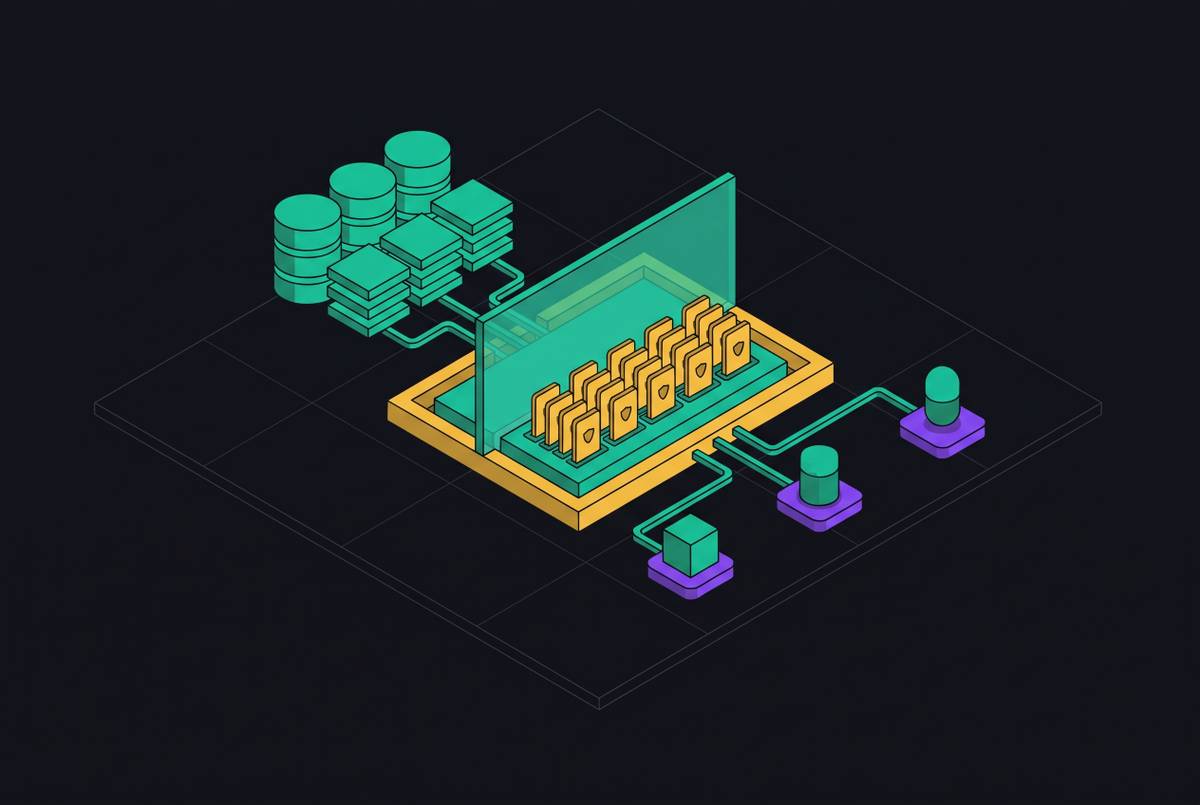
A governed Parquet-plus-DuckDB layer separates metric preparation from metric consumption. Supabase Postgres data is modeled into Parquet datasets, DuckDB queries those files, and a single MCP server exposes the governed surface. This pattern does not require production schema changes, a separate warehouse, or a parallel ETL pipeline.
Pre-calculation addresses stability by encoding metric logic in the dataset. An agent and a dashboard read values derived from the same definition, with no opportunity for either caller to rewrite that logic. The contract still needs an owner and versioning. Parquet supplies the data format, while the organization decides what a metric means and when its definition may change.
The same datasets satisfy the pre-modeling requirement because business logic is resolved before a consumer asks for a number. DuckDB provides fast, low-cost querying over the Parquet files rather than scanning production tables for every analytical request. Agents do not need to reconstruct the meaning of the source schema.
The MCP server enforces read-only access and logs every interaction with the governed layer. It also provides the programmatic interface for agents and human-facing dashboards through one access point. Safety depends on those controls being enforced through the file format and protocol.
Why pushing pre-calculated metrics to where work happens beats pulling on demand
Pull-only delivery makes awareness depend on a person opening a dashboard or an agent initiating a query. Scheduled delivery removes that dependency for recurring decisions.
For human teammates, the practical pattern is scheduled delivery through Slack, email, or a report. A CEO can receive ARR, churn, and gross margin before the weekly meeting without opening a dashboard. For agents, pre-calculated datasets come with the context already worked out, so they can skip a cold-start query against a live schema. Neither path needs to select a revenue column or consume a production connection at the point of use.
Proactive delivery also reduces an observability gap. Without it, a degrading KPI may cross a threshold but become visible only through a user complaint. The lesson for early-stage B2B SaaS teams is to apply this discipline to a small core set, including ARR from the billing system, churn, CAC, LTV, and gross margin. A sprawling dashboard of everything the product can instrument is not the prerequisite.
Push complements the programmatic interface by making recurring delivery independent of ad hoc requests. When the numbers sent on a schedule match the governed sources that agents query, the executive team can debate what to do using an agreed version of ARR. The delivery channel is secondary to that shared definition.
What analytics backend works best for Supabase teams that need full API control?
A Supabase team choosing a backend today should ask the same questions about each option. Does it expose governed metrics through a stable, versioned API or MCP interface, or only through a UI? A UI-only option cannot support this use case. An interface that merely accepts queries is also different from one that exposes metric definitions code can depend on.
Does the backend own a governed definition, or must each caller work out how to calculate the number? That distinction separates a metric service from a flexible query endpoint. With a backend-owned governed definition, adding a new agent creates another consumer of an existing contract, while leaving each caller to calculate the number creates another opportunity to redefine it.
Do queries reach a governed analytical copy, and does the interface enforce read-only permissions and retain auditable records? Would using it require schema changes, a warehouse, or an ETL pipeline that is more than the team can handle today? For isolation alone, Supabase read replicas address production workload contention. For columnar analytical performance, Supabase points to Pipelines or Analytics Buckets, while the governed Parquet-plus-DuckDB pattern addresses the combined requirements of pre-modeled metrics and controlled programmatic consumption.
Finally, can the backend deliver pre-calculated metrics to Slack, email, or agent context on a schedule? For API-first and agent-first teams, the strongest headless analytics choice is the one that combines a dependable metric contract with safe access and routine delivery, without making a frontend the gateway to the data.