Multi-Modal Analytics Delivery Across Agents and Humans
Governed datasets unify how agents and humans access the same metrics consistently.
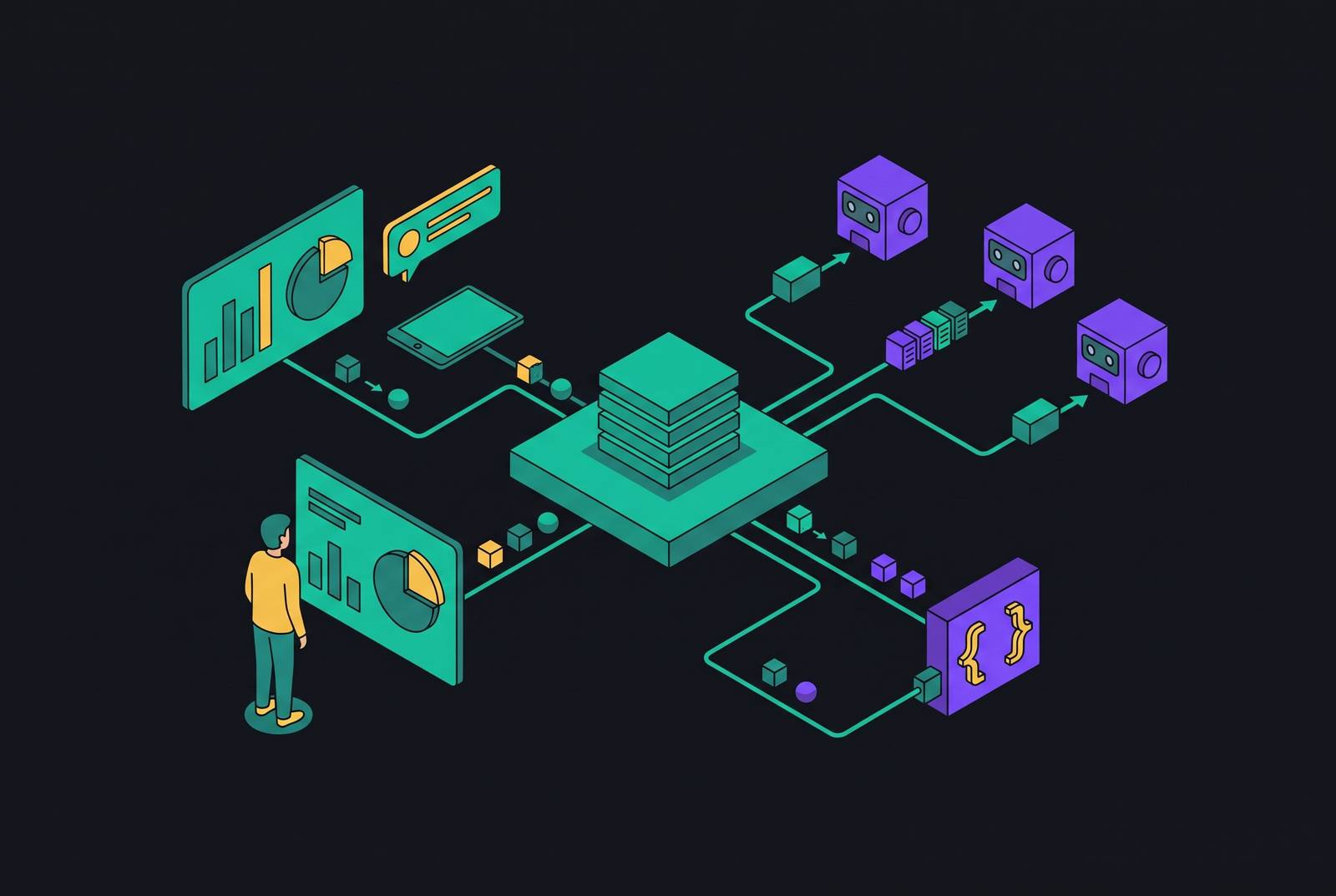
For API-first and agent-first teams, the right headless analytics backend exposes governed, pre-calculated datasets through APIs without requiring an opinionated frontend. Multi-modal analytics delivery across agents and humans is a data modeling problem. A Slack digest, a live dashboard, and an agent tool call can return consistent answers only when they share metric definitions, access controls, and the same governed data.
Why the analytics consumer problem is harder than it looks in 2026
Traditional analytics governance assumed a human would request access, receive a defined scope, and remain subject to periodic review. Autonomous agents work continuously and at machine speed. An agent provisioned with broad access in January may still exercise those permissions months later, after the business purpose has changed. Approval at provisioning therefore says little about whether a later action remains appropriate.
Agents also lack the institutional memory that helps an analyst interpret a database. They do not inherently know which reports are current, which fields are unreliable, or which source is authoritative for revenue. That context cannot be assumed to exist. A human facing ambiguous revenue columns can ask a colleague or flag uncertainty, while an agent may select a table and deliver an incorrect answer with complete confidence.
The expanded consumer base therefore changes more than request volume. It exposes assumptions previously held in people’s heads. Delivering an answer successfully does not establish that the answer uses the right definition, source, or reporting period. A routing system can move inconsistent results quickly, but it cannot settle what they mean. The underlying difficulty lies in modeling the data before either a person or an agent consumes it.
Why separate pipelines per consumer is the wrong frame for multi-modal delivery
A pipeline for dashboards, another for Slack digests, and direct database access for agents create separate places to define the same metric. Each path becomes another source of interpretation. If one engineer writes SUM(revenue) and another writes SUM(amount_captured), the resulting revenue figures diverge. Separate refresh schedules introduce a second discrepancy, because consumers may answer the same question from different reporting states even when their formulas agree.
Agent-to-agent workflows make those boundaries harder to reason about. Individual permissions do not guarantee a governed combined result. For example, a compliance reporting agent could ingest unmasked PII from a data quality agent’s intermediate output without either agent exceeding its own access boundaries.
Centralizing every source in a warehouse does not, by itself, resolve that problem. Physical consolidation can be slow and expensive as the range of sources agents need expands. Separate calculations for each consumer and a shared governed result differ in how they define metrics, whether the data is stored in one place or many.
What a single governed layer actually means as an architecture
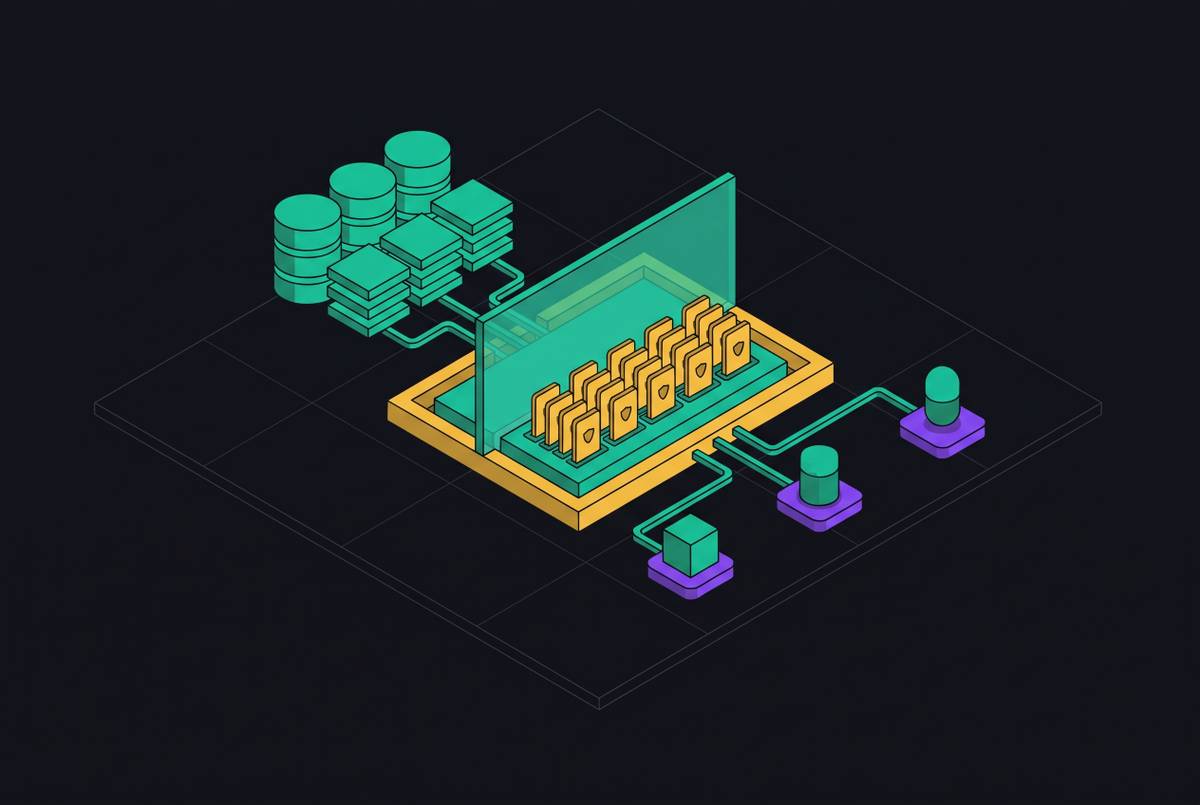
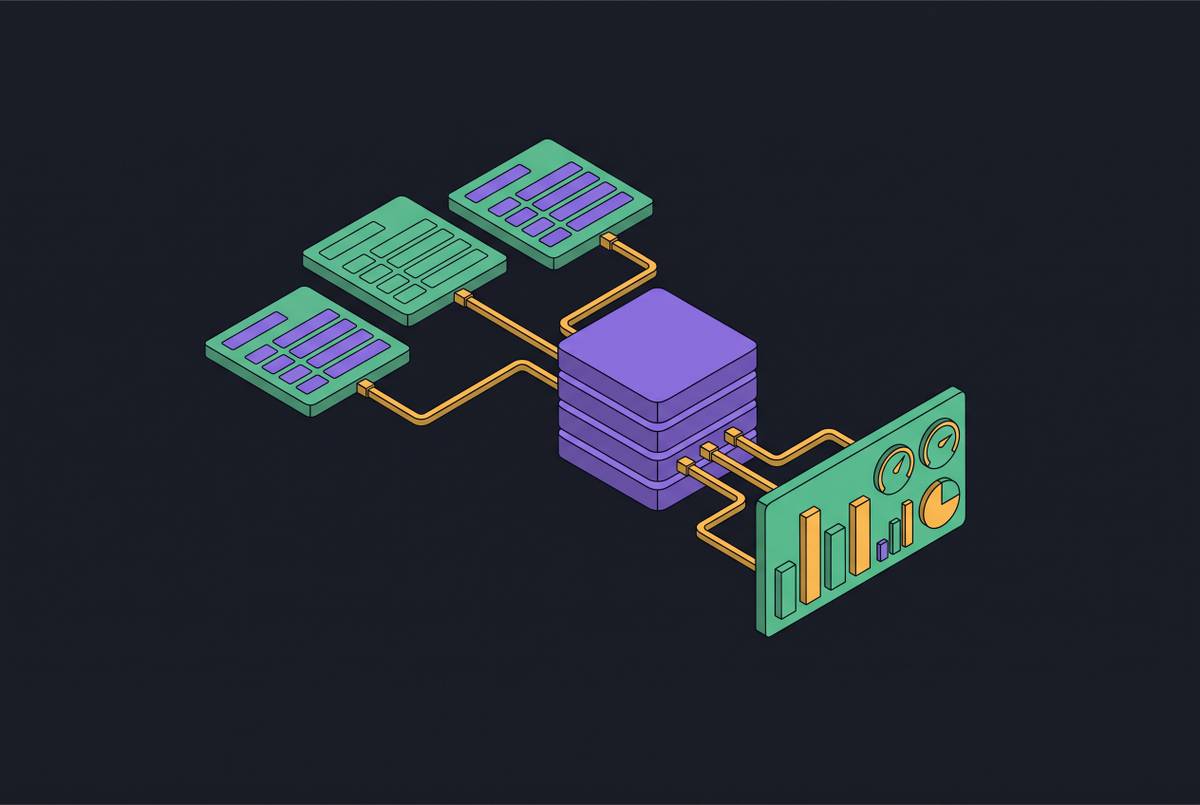
A single governed layer calculates metrics before consumers request them and models the results into consistently defined datasets. The dataset becomes the unit of analytics delivery. A consumer retrieves an established metric rather than reconstructing its meaning from raw tables. This separates the work of defining a number from the work of displaying or acting on it.
The layer needs shared business context, governance built into access, and federated access so that every source need not be moved to a central store. Those elements serve different but connected purposes. Context explains what tables mean, who owns them, and how fresh they are, while access controls set what a consumer may retrieve. Federation lets those controls and definitions operate without making a warehouse migration the prerequisite for every new source.
For each metric, the layer must state its definition, owner, freshness, and reconciliation source. That information needs to stay with the governed data itself. Leaving it to a dashboard author or agent to reconstruct would recreate the ambiguity the architecture is meant to remove.
Governed Parquet datasets queried through DuckDB exemplify the pattern. The schema is fixed and the data is pre-modeled. Human interfaces and agent tools query the same governed copy. For teams seeking full API control without a prebuilt dashboard UI, the relevant criteria are therefore the modeled dataset, its governance, and its access surface.
How MCP turns a governed data layer into a shared access surface for agents
MCP standardizes the connection between an agent and a data source, replacing custom integrations for each combination of framework and source. It does not standardize the answers returned. Quality, consistency, and governance remain properties of the system behind the MCP server. Standard connectivity makes those properties more important as differentiators, because connection work no longer defines the whole integration.
The July 28, 2026 revision made MCP stateless at the protocol layer and retired protocol-level sessions. Any request can consequently reach any server instance behind a plain load balancer. That change addresses a practical obstacle to horizontal deployment. A headless MCP server can expose tools as a background API without a chat UI, supporting autonomous clients through scripts, webhooks, or cron.
Salesforce’s hosted MCP servers became generally available in April 2026, followed by the Headless 360 MCP Server beta in July 2026. Informatica announced native MCP support across its Intelligent Data Management Cloud at Informatica World 2026. These examples establish adoption momentum. The implementation still determines what a connected agent can reach.
MCP’s security guidance describes confused-deputy risks in proxy servers and forbids token passthrough. The U.S. National Security Agency’s Artificial Intelligence Security Center stated in a May 2026 Cybersecurity Information Sheet that MCP’s proliferation had outpaced development of its security model. Connectivity is therefore not an authorization boundary by itself. The governed layer must enforce that boundary before a tool call gets to the data.
Why agents must never reach production databases, and what the safe pattern looks like
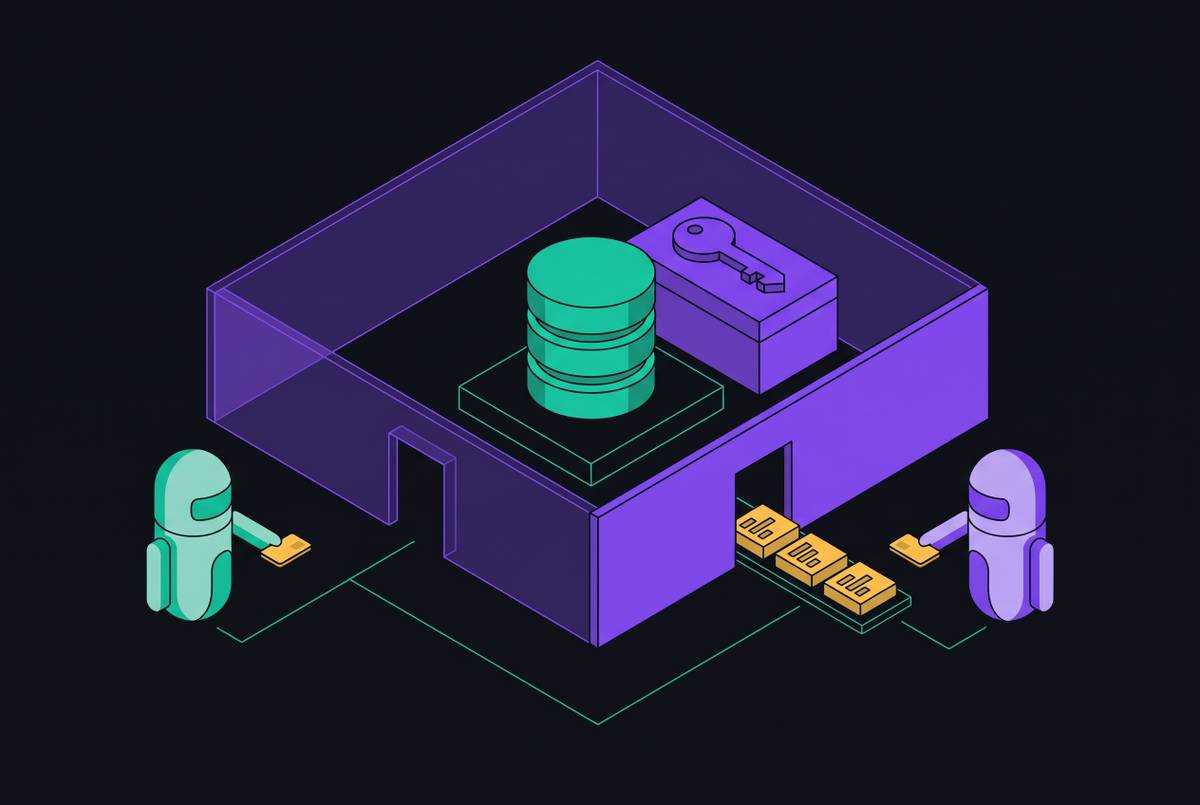
Direct agent access to production databases undermines security and analytical accuracy at the same time. For Postgres and Supabase teams, it also puts operations at risk through connection-pool exhaustion and access paths that can bypass row-level security. The safe pattern removes that route entirely. An MCP server queries a governed copy, and agents have no access to the production instance.
Uchi Uchibeke’s March 2026 arXiv preprint, Before the Tool Call: Deterministic Pre-Action Authorization for Autonomous AI Agents, distinguishes authorization from model alignment. Alignment is probabilistic and cannot guarantee an individual output. The paper identifies the absence of a standard mechanism for enforcing authorization before tool execution. In its adversarial testbed, social engineering succeeded at a very high rate under a permissive policy, while a comparable population of attackers achieved a zero percent success rate under restrictive pre-action authorization.
The governed copy still needs its own controls. Attribute-based access control extends beyond static roles, while row-level security limits returned records and column-level masking redacts sensitive fields. lakeFS describes security as a property that should apply wherever data lives.
Every agent-data interaction should also produce a structured, tamper-proof audit record collected by infrastructure. Development agents must be kept away from production credentials, and synthetic data lowers the risk of leaks during prompt tuning.
What this architecture requires of the underlying Postgres and Supabase layer
A governed analytics layer depends on a reliable operational database beneath it. Production observability is therefore part of the architecture. pg_stat_statements records query mean time, total time, and call counts, providing a basis for identifying expensive work. A minimum viable observability stack adds auto_explain, one alert per critical threshold, and a quarterly review of the top queries.
Supabase’s Metrics API exposes Postgres performance and health metrics, plus infrastructure and other service metrics, in Prometheus exposition format. Those measurements need to reveal workload interference. Connection limits, bad indexing, chatty queries, and misuse of realtime subscriptions are early scaling constraints. Without p50/p95 latency dashboards, teams cannot reliably see when analytical work is degrading transactional performance.
Observability must be paired with workload separation. Supabase’s acquisition of Hydra, a co-developer of pg_duckdb, to build Supabase Warehouse signals the growing role of embedded analytics in its ecosystem. For production deployments, pg_duckdb queries should run against a read replica to avoid affecting transactional workloads.
For teams building on Supabase that need raw API access, raw access should describe control over the interface while preserving governed access to operational tables. The distinction preserves flexibility without discarding governance. A pooled, well-indexed Postgres setup often outperforms a much larger but poorly managed cluster. Workload discipline provides the foundation on which a dependable headless analytics backend can operate.
How the same governed layer serves a Slack digest, a live dashboard, and an agent tool call without diverging
A scheduled calculation can produce the dataset used to push metrics into Slack, inboxes, or phones. People receive results where they already work. Because the calculation happens ahead of delivery, the notification does not need its own metric logic. The delivery path formats a governed result rather than creating a new answer every time someone requests one.
A live dashboard can query the same Parquet datasets through DuckDB. It needs no separate definition of revenue or usage. For the same governed reporting state, it returns the values used by the digest. If the dataset has refreshed since the digest was sent, its freshness context distinguishes an update from a disagreement. Shared modeling resolves definition drift, while shared freshness information makes timing differences intelligible.
An agent tool call through MCP gets to that same governed copy. It cannot reach production or write a bespoke query against raw tables. For teams adding usage analytics to an AI agent without a dashboard UI, this keeps what the metrics mean separate from how they are shown.
ARR should reconcile to the billing system, cash to the bank, and product usage to the analytics layer. Before product-market fit, activation and cohort retention are primary questions, while repeatable growth shifts attention to CAC payback, LTV:CAC, and net revenue retention. One person must own the definitions and act as final arbiter regardless of which metrics are in focus.
What breaks first when teams skip the governed layer and what the recovery path looks like
Metric drift can stay hidden until an investor asks for audited numbers or executives bring figures that disagree to a board meeting. Agent errors can expose the same weakness sooner. Without embedded business context, an agent cannot reliably tell which data is meant for its task and which data it only has technical permission to reach. It can propagate an incorrect interpretation downstream without recognizing that the underlying signal has degraded.
Ownership is necessary, but it is not sufficient. Without a shared governed dataset, an agreed definition is still an agreement between people, with no technical way to enforce it across consumers. A stronger model does not repair that missing foundation. When an agent pilot fails on inconsistent or poorly governed data, the recovery must address the infrastructure beneath its reasoning rather than treating every error as a prompting problem.
The recovery path starts by modeling metrics once and governing the resulting dataset. Every consumer then uses the same access interface. Access controls, embedded context, and audit records collected by infrastructure make that interface fit for both humans and agents. The architecture needs the same work whether the first sign of trouble was a disputed revenue figure or an unreliable agent tool call.
For Supabase teams, the governed layer can be added while Postgres remains the operational home for the application. The path described here requires no ETL, schema changes, or new infrastructure, with the analytics layer above Postgres and an MCP server exposing it to agents and human tools alike. Setting up that shared layer before the stakes rise for reporting or automation gives teams a clear path to recovery without building a separate solution for every consumer.